Depot Charging Strategy: Grid Upgrade vs Battery-as-a-Service
Reducing cost, eliminating grid constraints, and enabling scalable fleet electrification.
The Bottleneck Blocking Fleet Electrification
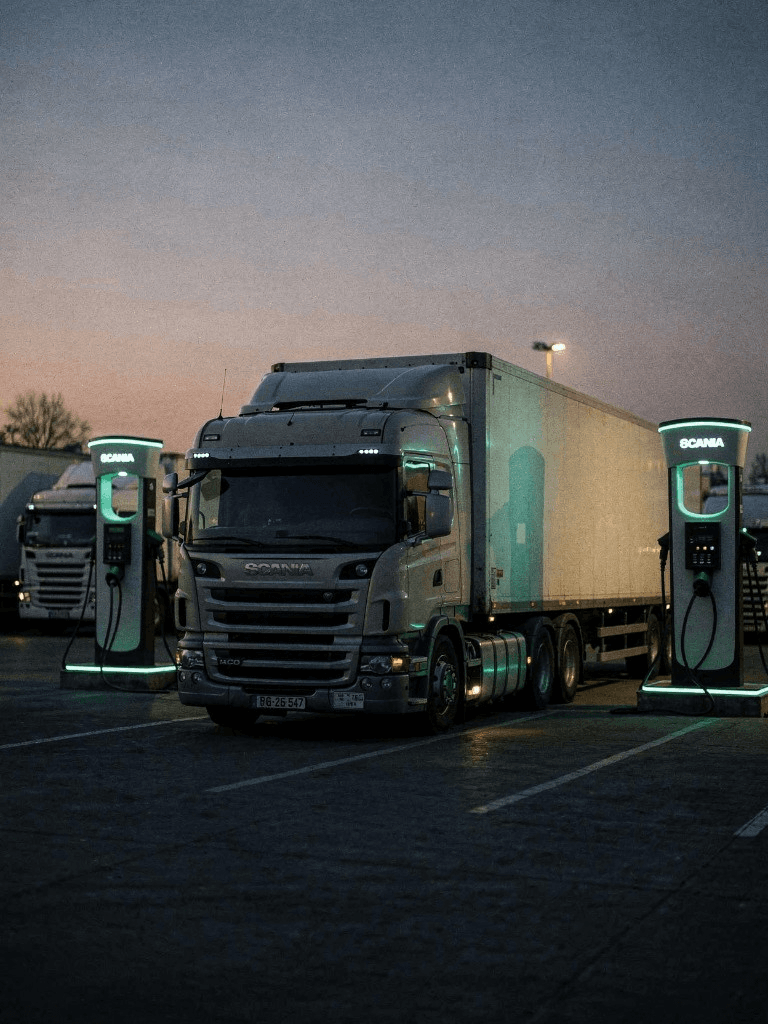
As commercial fleets transition to electric trucks and buses, depot charging demands are escalating rapidly. Yet the infrastructure required to support this transition is becoming a critical barrier — not a solved problem.
Grid Upgrades Are Slow
Utility-led grid reinforcement projects routinely take 1–2 years, leaving fleets grounded during the transition window.
Capital-Intensive & Uncertain
Upfront connection upgrade costs can exceed £500,000 — with no guarantee of approval, timeline, or cost certainty.
Capacity Constrains Scaling
Fixed grid connections cannot flex to meet growing fleet demand, forcing operators to delay or limit EV adoption.
Peak Demand Charges Escalate
Simultaneous vehicle charging during peak periods triggers punishing demand tariffs, inflating daily operating costs.
Key Message: Grid capacity is becoming the single greatest bottleneck for fleet electrification — and traditional infrastructure responses are too slow, too costly, and too rigid.
Comparison Assumptions
To provide a like-for-like comparison, both options are modelled against a small fleet and daily energy demand. This baseline is conservative and intentionally designed to be scalable — the economics improve further as fleet size grows.
Electric Trucks
Reference commercial depot fleet size used for all cost modelling in this comparison.
kWh/Day Required
Total daily energy demand across all vehicles at full operational utilisation.
Grid Connection
Grid Connection needed to support a small electric fleet.
Operating Days/Year
Commercial depot operations modelled year-round for annualised cost comparison.
Scalability Note: This comparison represents a 3-truck entry-level fleet. The BaaS scales linearly — larger fleets generate proportionally greater savings versus the grid upgrade alternative, with no additional infrastructure lead time.
Two Paths Forward
Fleet operators facing depot charging constraints have two very different options. One locks in cost, delay, and risk; the other enables faster, more flexible electrification.
Faraday GridShield
- On-site battery storage deployed in weeks, helping you electrify without waiting for grid upgrades
- A scalable charging solution that adapts as your fleet grows
- A pay-per-use model that avoids ownership burden and degradation risk
- A fully managed asset with Faraday Battery handling maintenance end to end
1MW Grid Connection Upgrade
- Significant upfront capital spend (£500k+) for connection charges, civils, and planning
- 1–2 year utility lead times, with approval and delivery timelines outside your control
- A fixed connection that offers little flexibility as fleet demand increases
- Ongoing peak demand charges and standing fees that continue to pressure operating costs
Capture the Cheapest Renewable Energy
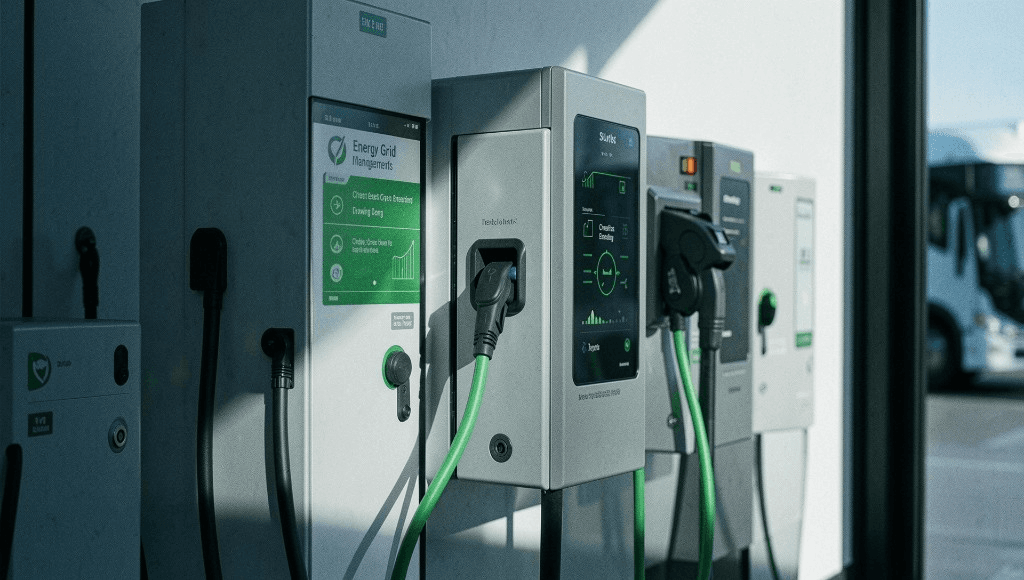
As wind and solar generation increase, electricity prices can fluctuate dramatically throughout the day. Faraday GreenCharge captures these low-cost renewable energy periods, stores energy in GridShield, and delivers it when vehicles need charging.
Wholesale Prices
Optimise charging based on real-time electricity market rates, always seeking the lowest cost.
Fleet Demands
Integrate charging schedules with fleet operational requirements to ensure vehicle readiness.
This dynamic approach ensures GridShield is charged when electricity is cheapest and greenest, translating into significant operational savings and environmental benefits.
Strategic Advantages of the Faraday BaaS Model
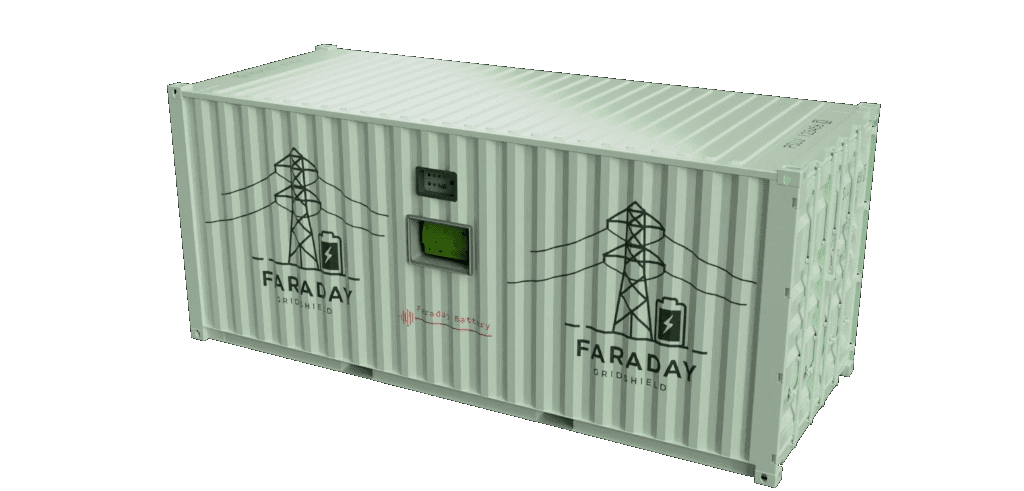
Faraday GridShield does more than cut costs — it gives fleet operators a faster, more resilient, and more controllable path to electrification than a grid upgrade ever can.
Go Live in Weeks
Skip utility approvals and multi-year delays. Deploy on-site battery systems quickly and start electrifying operations now.
Eliminate Peak Charges
Battery storage smooths charging demand, avoids costly spikes, and removes a major source of operating expense.
Scale Without Grid Constraints
Add vehicles on your timeline. Growth stays modular, with no new grid application blocking fleet expansion.
Backed by TotalCare
On-site battery support keeps the depot running through outages and supply disruptions, protecting uptime and continuity.
The Clear Choice for Fleet Electrification
Faraday GridShield replaces expensive, slow grid expansion with a scalable, lower-cost energy infrastructure service — available today.
36% Lower Cost per kWh
Immediate and sustained savings from day one of operation.
Deployed in Weeks
No utility approvals. No 1–2 year wait. Fleet electrification begins on your timeline, not the grid's.
Zero Asset Risk
All battery degradation, maintenance, and replacement risk fully transferred to Faraday GridShield.
Enable fleet electrification today — without waiting for the grid.
Contact Faraday Battery to receive a site-specific BaaS proposal for your depot.